How to Judge Seam Placement and Fabrication Quality

Seam placement is settled before the saw touches the slab. The running record countertop fabrication riverside the variable life holds shows that most complaints on countertop jobs in Riverside, CA trace back to layout decisions made at the template stage, not to the stone itself. Granite, quartz, quartzite and marble all expose the same mistakes once they are set and sealed.
Reading a seam
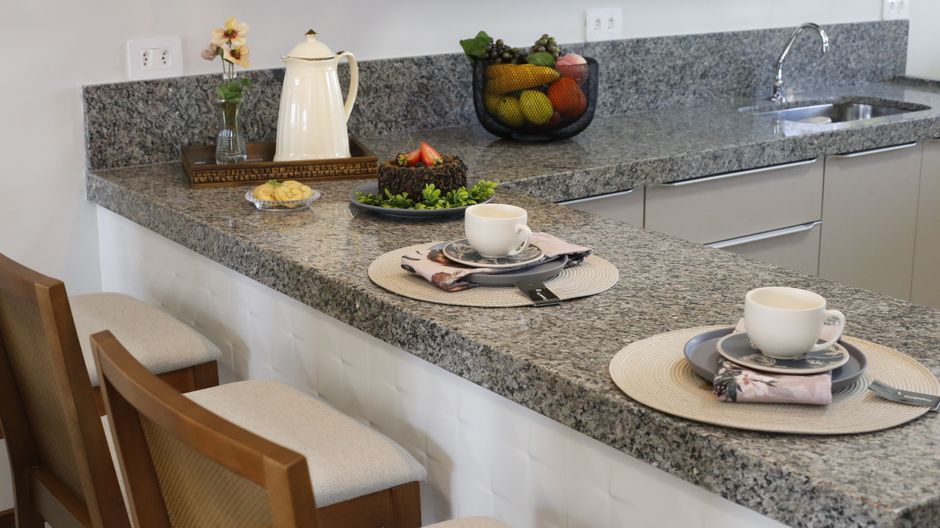
A good seam is tight and flat across both pieces. Run a fingernail across it. A lip means the pieces were not pulled level, and it will catch cloths and grit. The gap should be filled with epoxy tinted to match the stone, so it blends in. It will still be visible up close. No fabricator hides a seam completely, and a flat, narrow line is the honest target.
Where the seam goes

Seams are usually planned away from sinks and cooktops where possible. A cutout removes stone, and the thin strip left beside it is the weakest part of the top. Putting a joint there stacks two weak points together. On an L-shaped kitchen, the seam often sits in the straight run between the corner and the sink, where the span is supported on both sides.
Veining and pattern
On a veined marble or quartzite slab, the pattern should carry across the seam so it flows rather than jumps. That means the pieces are cut in sequence from the same slab, then laid out side by side before any edge is polished. Quartz with a repeating pattern is more forgiving, but a bold movement still needs matching. Ask to see the pieces dry fit.
Edge profile and cutouts
An edge profile should be the same shape and polish along its whole length. Look down the edge in raking light for chatter marks, which show as small repeating ripples, and for dull patches where the polish was skipped. An eased edge is simple, but a bullnose or ogee takes more passes and more hours. Profiles do not cost the shop the same time. Sink cutout edges should be smooth and polished, most of all on an undermount, because the edge is exposed and handled every day.
Overhangs and approving the slab
A larger overhang, such as island seating, needs brackets, corbels or a support plate under the stone. Granite does not cantilever on its own just because it is thick. Check the support is drawn on the template before cutting starts. Then ask to view your slab and approve the layout before it is cut. Standing at the slab, chalk lines show where the seam, the sink and the veining will land. A remnant can serve a vanity or a small bar, but it limits where the joints can go, so lay it out the same way.